01Visible mending
Repair one tear or worn edge so a useful item returns to service.
First session: Borrow a needle, use matching thread, and finish one five-centimeter repair.
02Pantry meal planning
Turn food already at home into a repeatable meal and shopping note.
First session: Choose three ingredients, cook one complete dish, and record the version worth repeating.
03Bicycle ABC checks
Learn to inspect air, brakes, and chain before a ride.
First session: Use a verified checklist on your own bicycle; stop before adjustments you cannot confirm safely.
04Spending pattern logs
Build a clear picture of where one ordinary week of money goes.
First session: Categorize seven past days in a free sheet and write one realistic rule.
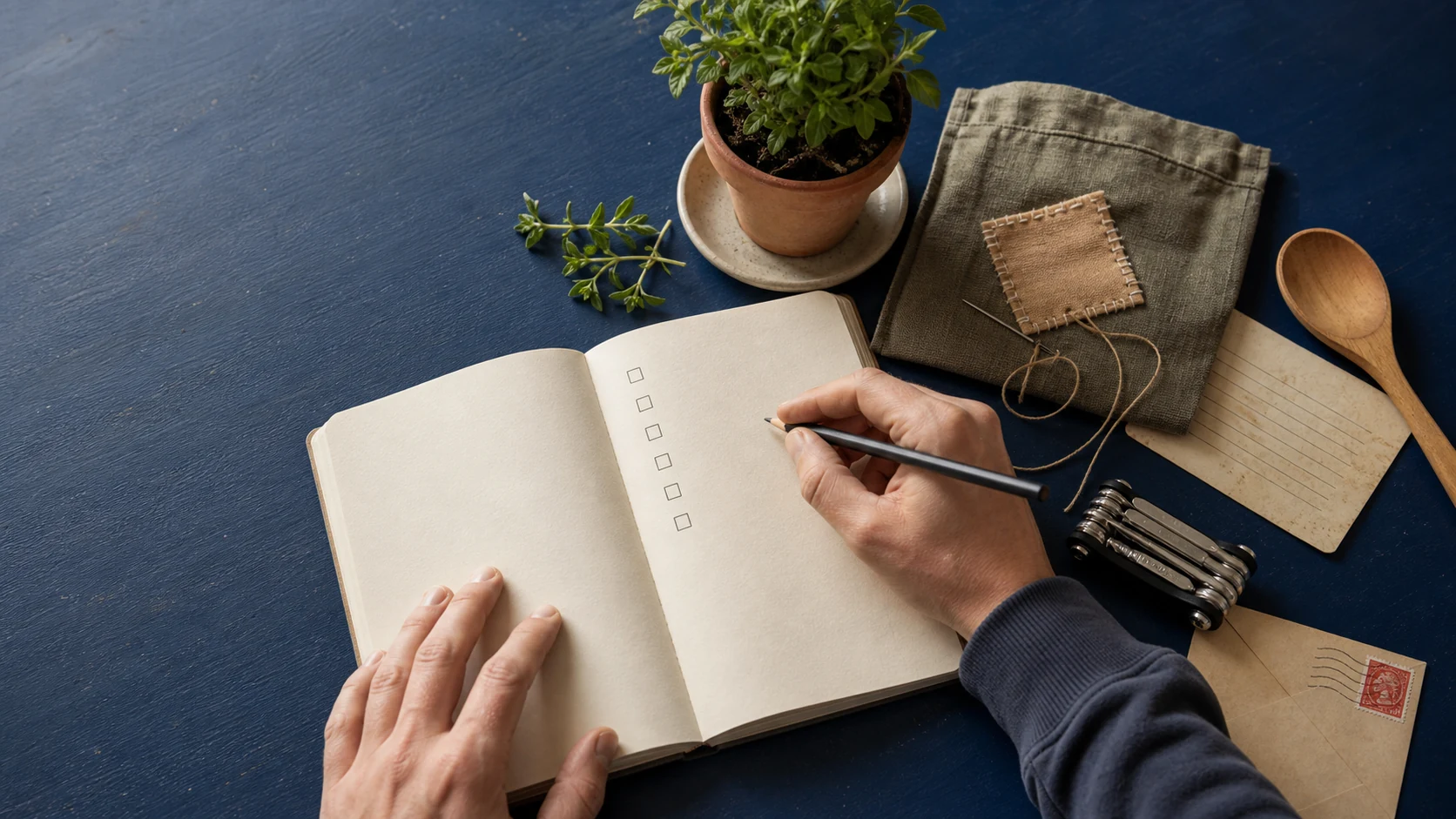
05Windowsill herb care
Practice light, water, harvest, and observation on one useful plant.
First session: Audit one window and keep one borrowed or existing herb healthy for a week.
06Ten-phrase language scripts
Learn words inside a conversation you expect to use.
First session: Write ten lines for one real situation and rehearse them aloud twice.
07Knife-skills practice
Make meal preparation calmer through controlled, basic cuts.
First session: Use one familiar vegetable, a stable board, and a slow 15-minute safety-first practice.
08Hand-sewn alterations
Change one simple hem, button, or loose seam by hand.
First session: Pin and repair one low-risk garment detail; do not start with structured tailoring.
09Container gardening
Learn soil, drainage, light, and watering on a tiny footprint.
First session: Reuse one suitable container and test drainage before buying a planter set.
10Furniture touch-ups
Restore a small surface instead of replacing the whole item.
First session: Clean and test one hidden spot; avoid structural, electrical, or lead-paint work.
11Map and route planning
Turn local walking into navigation practice and a reusable route.
First session: Plan a three-landmark loop, walk it in daylight, and note one correction.
12Digital photo archiving
Make family photos easier to find, protect, and share.
First session: Rename and back up one month of images using folders you already have.
13Two-minute speaking briefs
Practice explaining one familiar topic clearly and calmly.
First session: Record one beginning, three points, and an ending; review only for clarity.
14Home inventory notes
Create a useful record before a move, claim, repair, or replacement.
First session: Document one drawer or shelf with dates and photos, without uploading private identifiers.
15Personal knowledge notes
Turn reading into ideas you can retrieve and use.
First session: Summarize one article in five lines and connect it to one existing note.
16Bread baking
Practice timing, temperature, texture, and repeatable process.
First session: Make one small loaf from a simple trusted recipe and log the result.
17Clothing care
Extend garment life with washing, storage, stain, and repair habits.
First session: Read two care labels and improve one ordinary laundry or storage routine.
18Weather observation
Build attention to clouds, wind, temperature, and local patterns.
First session: Record the same five observations at the same time for seven days.
19Composting basics
Turn suitable kitchen scraps into a managed material cycle.
First session: Audit what your local system accepts before starting a small, contained trial.
20Batch meal prep
Practice sequencing, portioning, cooling, and cleanup.
First session: Prepare two identical lunches from a meal already planned for your household.
21Volunteer tutoring
Turn knowledge into a clearer explanation for someone else.
First session: Offer one 20-minute lesson through an appropriate program and use one exit question.
22Family recipe interviews
Preserve a practical method and the story around it.
First session: Ask five fixed questions and produce one tested, shareable recipe draft.
23Basic coding automation
Remove one repetitive text or number step with a tiny tool.
First session: Use a free browser editor to automate one five-row sample task.
24Household workflow design
Reduce daily friction by redesigning one drawer, shelf, or entry point.
First session: Observe the order of use, rearrange only what you own, and test for three days.