25 practical ideas10–45 min startsUpdated 2026-09-07
25 Productive Hobbies: Useful Ideas for Adults
Cooking, mending, writing, walking and 21 more ideas—each with a small finish line. Choose by result, time and energy, then start free.

25 practical ideas10–45 min startsUpdated 2026-09-07
Cooking, mending, writing, walking and 21 more ideas—each with a small finish line. Choose by result, time and energy, then start free.
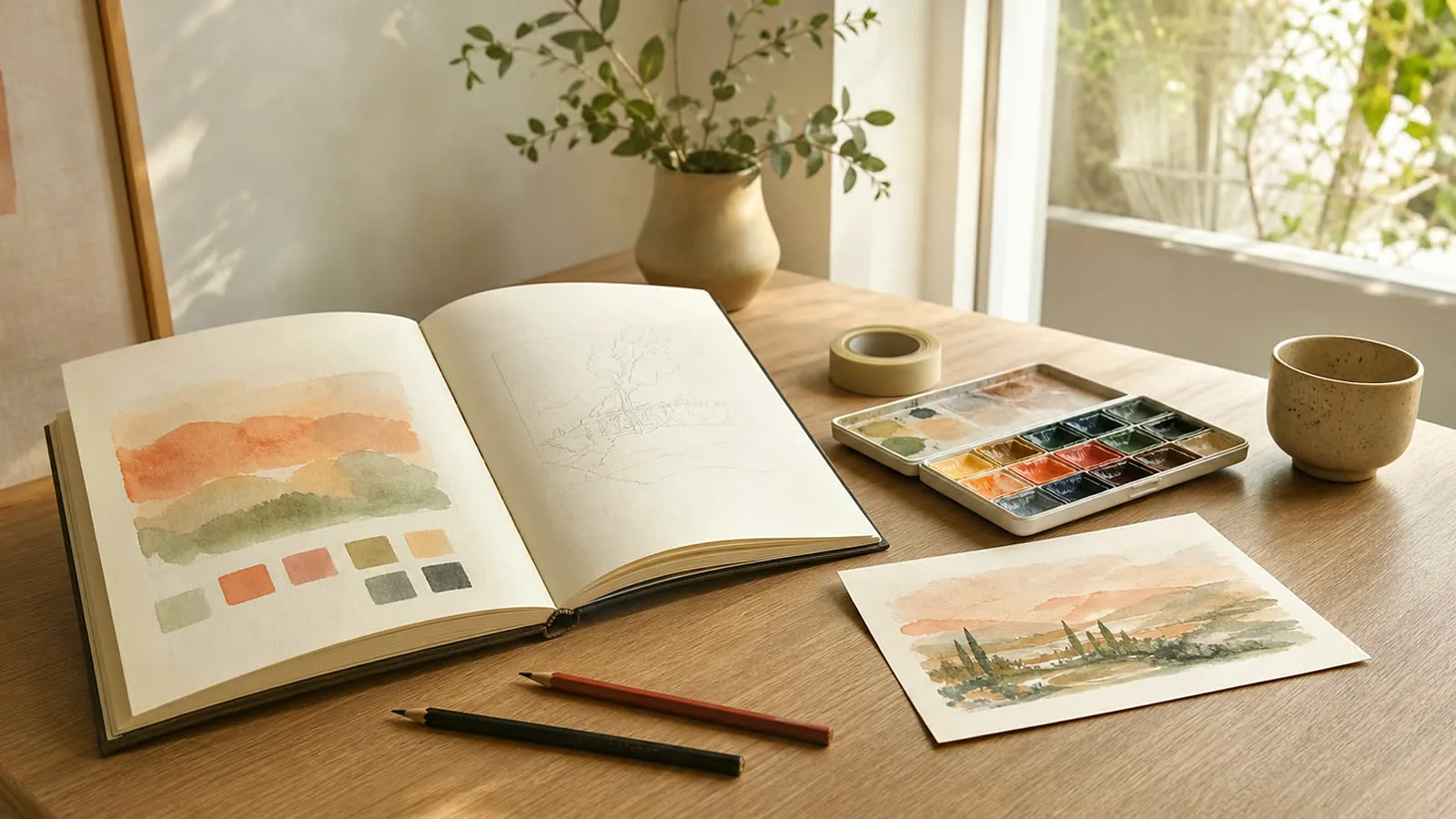
Useful today: improve one meal, item, drawer, or plant. Build a skill: finish one language script, code utility, chess set, photo study, or speaking brief. Make something: complete one page, card, recipe note, or photo story. Feel better: finish one mapped walk or short movement sequence. Connect: interview, thank, help, swap, or host one round.
Definition: a productive hobby gives something back—a useful result, skill, creative work, supportive routine, or contribution—without needing to become a side hustle.
If your real constraint is location or mood, use the focused paths for at-home hobbies, after-work hobbies by time and remaining energy, low-energy hobbies, or things to do instead of scrolling.
Start with the result, time, and energy you have today. Add setup or screen only when they matter. The chooser keeps one best match and two honest alternatives, and every result opens an exact no-buy test—not a store.
Three recommendations are ready: one best match and two alternatives.
Turn three ingredients you already own into one complete meal and one reusable note.
See the exact first sessionRepair one small flaw with a deliberate patch instead of hiding it.
See the exact first sessionRebuild one drawer around the order in which you actually use it.
See the exact first sessionAudit light, water, and one kitchen scrap before buying a garden kit.
See the exact first sessionInspect one harmless household system and leave with one dated action.
See the exact first sessionBuild and rehearse one real conversation instead of collecting vocabulary.
See the exact first sessionAutomate one repetitive text or number task with a free browser editor.
See the exact first sessionSolve five positions, write one pattern, and stop before a full game.
See the exact first sessionMake 12 frames of one object and choose one keeper without editing.
See the exact first sessionExplain one familiar topic with a beginning, three points, and an ending.
See the exact first sessionObserve one mug, shoe, or leaf and finish a dated drawing in ink.
See the exact first sessionLetter one short message on folded paper and send it to one person.
See the exact first sessionChoose three landmarks, walk one loop, and mark the version worth repeating.
See the exact first sessionChoose four comfortable motions and leave with a repeatable sequence.
See the exact first sessionAsk five fixed questions and leave with one story-rich recipe draft.
See the exact first sessionHow ranking works: Exact fits come first. When no idea matches every answer, the closest compromises stay visible and explain what still fits.
“Learn cooking” is vague. “Make one pantry meal and write one adjustment” has an ending.
Finish the no-buy version twice. Then name the exact friction that stopped or slowed you.
If it is only attractive when imagined as income, use the separate money-making hobby guide and evaluate it as a business path.
This approach follows a simple evidence-backed direction: start with the feeling or result you want, try a small version before spending, and avoid making leisure unnecessarily effortful. Read the independent guidance from TIME, UC Berkeley Greater Good, and the 2025 leisure-effort study indexed by PubMed.
Each idea includes a finish line, real-life fit, repeat signal, and reason to skip it. Choose the section by what you want to leave behind.
These are productive because the first session removes one small piece of friction now.
Choose three ingredients that need using and build one simple meal around them.
First session: Set a 30-minute limit, make one plate, then write the ingredient ratio and one change for next time.
Finish: one meal + one reusable note. Repeat signal: you want to improve the same base recipe. Skip if: cooking after work already feels like a chore.
Repair a small tear or worn spot with a patch that is meant to be seen.
First session: Borrow a needle, thread one contrasting line around scrap fabric, then fix one non-stretch item with a simple running stitch.
Finish: one usable item. Repeat signal: you notice another fix you want to attempt. Skip if: tiny hand movements strain your eyes or hands.
Treat organizing as a repeated design practice, not a weekend purge.
First session: Empty one drawer, remove five things, and return the rest in the order you reach for them. Use existing boxes only.
Finish: one easier routine. Repeat signal: the drawer stays usable for three days. Skip if: decluttering triggers conflict with someone who shares the space.
Build observation and care skills in a very small space.
First session: Track two hours of window light, regrow one scallion base in water, and date a seven-day observation note.
Finish: one light map + one care test. Repeat signal: you check the plant without a reminder. Skip if: the window has almost no light and you do not want a grow light.
Learn how one harmless household system should look, sound, and be scheduled.
First session: Check the date and condition of one smoke-alarm battery, air filter, or appliance manual, then add one safe action to the calendar. Do not open wiring, gas, or pressurized systems.
Finish: one dated maintenance action. Repeat signal: you want to document the next system. Skip if: the task requires a licensed professional.
Keep the unit of progress small enough to use, show, or test at the end of one sitting.
Practice one real exchange instead of memorizing an endless word list.
First session: Write ten phrases for ordering food, introducing yourself, or asking directions. Listen to each, speak the full script twice, and circle two weak phrases.
Finish: one usable conversation. Repeat signal: you want a second situation. Skip if: app streaks create more pressure than curiosity.
Learn code by making one tool that removes a repetitive annoyance.
First session: Use a free browser editor to build a word counter, tip calculator, or filename cleaner. Change one input and make the output work twice.
Finish: one working micro-tool. Repeat signal: you can name the next useful feature. Skip if: you mainly want to collect courses.
Train pattern recognition without committing to a long game.
First session: Solve five beginner tactics with a free app or borrowed board. For each miss, name the pattern in three words.
Finish: five attempts + one remembered pattern. Repeat signal: you replay a missed position. Skip if: ratings make you anxious.
Use one object to learn angle, distance, and natural light with the camera you own.
First session: Take 12 unedited frames of one object near a window. Choose one keeper and write why its light works.
Finish: one selected image + one observation. Repeat signal: you want to test a different hour. Skip if: editing is the only part you enjoy.
Practice organizing a clear explanation for work, community, or everyday conversation.
First session: Choose a familiar topic, write one opening and three points, then speak for two minutes. Record only if listening back helps.
Finish: one complete explanation. Repeat signal: the second attempt is clearer. Skip if: recording yourself feels punishing; practice to an empty chair instead.
The goal is a small artifact, not a portfolio, audience, or personal brand.
Drawing turns observation into a page you can date and keep.
First session: Put one familiar object under a lamp. Observe for two minutes, draw in pen for fifteen, and add the date without erasing.
Finish: one dated sketch. Repeat signal: you notice a shape you want to redraw. Skip if: comparison with polished art blocks the start.
Turn one memory or observation into a beginning, middle, and final sentence.
First session: Write “I noticed…” at the top, draft for fifteen minutes, then revise only the opening and closing lines.
Finish: one readable page. Repeat signal: another scene appears while editing. Skip if: publishing pressure arrives before enjoyment.
Combine simple letter practice with a finished message for someone real.
First session: Test three versions of one short phrase, choose one, letter it on folded paper, and address the envelope.
Finish: one sendable card. Repeat signal: you think of the next recipient. Skip if: perfection keeps the card from leaving your desk.
Document a familiar dish so another person—or your future self—can reproduce it.
First session: Make or recall one recipe, record exact amounts and sensory cues, then add one photo or quick drawing.
Finish: one tested recipe page. Repeat signal: someone can follow it. Skip if: measuring removes the part of cooking you love.
Practice sequence and visual editing without video gear or a public account.
First session: Photograph one ordinary process in exactly six frames: place, start, detail, change, result, and ending.
Finish: one six-image sequence. Repeat signal: you want to retell it with fewer shots. Skip if: posting matters more than making.
These produce a route or repeatable sequence, not a performance score. Choose a comfortable version and respect your own limits.
Turn a familiar area into a route-building and observation hobby.
First session: Choose three nearby landmarks, walk one comfortable loop, and mark one quieter or more interesting variation for next time.
Finish: one repeatable route. Repeat signal: you want to change one segment. Skip if: weather, safety, or mobility conditions make the route unsuitable.
Build a short personal movement sequence around comfort, not intensity.
First session: Choose four gentle motions you can do without pain, repeat each slowly, and write the order on one card.
Finish: one reusable sequence. Repeat signal: it feels easier to start tomorrow. Skip if: movement causes pain, dizziness, or needs clinical guidance.
Learn one calm transition between a few beginner-friendly poses.
First session: Use a free beginner resource, choose three comfortable poses, and practice the transition twice on a towel or clear floor.
Finish: one remembered sequence. Repeat signal: the transition feels steadier. Skip if: you need individualized medical or movement advice.
Practice noticing seasonal change in one repeatable place.
First session: Sit or stand safely for fifteen minutes, record five things you see or hear, and sketch one shape without trying to identify everything.
Finish: one dated field entry. Repeat signal: you wonder what will change next week. Skip if: the location is inaccessible or unsafe.
Make food planning a small design puzzle instead of a rigid optimization task.
First session: List three meals you already like, map shared ingredients across one week, and leave two flexible slots.
Finish: one realistic meal map. Repeat signal: it reduces one decision. Skip if: food planning or tracking is harmful or medically complex for you.
The useful result belongs partly to another person, so keep consent and boundaries as important as completion.
Preserve a recipe together with the memory and sensory cues that make it usable.
First session: Ask permission, then use five questions: ingredients, order, visual cue, common mistake, and the story attached to the dish.
Finish: one recipe draft + one story. Repeat signal: the person wants to add details. Skip if: recording or sharing would cross a boundary.
Trade one small skill session instead of enrolling in a broad course.
First session: Offer a 20-minute lesson in something you can explain and ask for one equally bounded lesson in return.
Finish: one clear exchange offer. Repeat signal: both people want a second round. Skip if: expectations or time commitments are unclear.
Turn gratitude into a deliberate practice with a concrete recipient and ending.
First session: Name one specific action, one effect it had, and one sincere closing. Write, address, and send the note.
Finish: one delivered message. Repeat signal: another person comes to mind naturally. Skip if: contact would be unwanted.
Treat finding the right volunteer fit as a bounded research hobby before making a promise.
First session: Compare three local roles by task, schedule, travel, training, and contact method. Save one question for the best fit.
Finish: one evidence-based shortlist. Repeat signal: you are willing to contact one organization. Skip if: the role asks for a commitment you cannot keep.
Practice welcoming, explaining, and keeping a small shared activity moving.
First session: Choose one pencil-and-paper game, write the rules in five lines, invite one person, and play exactly three rounds.
Finish: one hosted mini-session. Repeat signal: someone asks for a rematch. Skip if: hosting creates more stress than connection.
Choose one no-buy plan above, complete the same small hobby twice on normal days, then name one blocker that showed up both times. Choosing is not starting, and products remain absent until the proof is complete.
Use what you own, borrow, or access free. Stop at the stated finish line even if the result is rough.
Repeat on a normal day, not an unusually motivated one. Notice setup, cleanup, comfort, and attention.
Buy only when you can name the blocker: a missing safe tool, poor instruction, uncomfortable grip, scattered storage, or unsuitable container.
Green light: you want a third session and one small item would clearly make it safer or easier. Wait: the purchase is meant to make the identity feel real.
Progress is saved only in this browser tab. Leave this tab open if the second session happens on another day.
Choose one no-buy plan above to begin.
The active page starts with zero Amazon links. A compatible path reveals exactly one minimum setup after the proof above; “nothing material” or a mismatched blocker returns an honest no-buy next step.
Switching ideas resets the evidence. The selected activity must reach its finish line in two real sessions.
Mending, herb care, and sketching map only to products that can solve the blocker you actually named.
If the blocker is not material or the reviewed products cannot solve it, LikeHobby recommends no purchase.
Disclosure before the paid link: As an Amazon Associate I earn from qualifying purchases. The optional Amazon search costs you nothing extra and never changes the no-buy-first recommendation.
A needle, a few thread colors, small scissors, and a thimble can remove the specific friction of borrowing mismatched tools.
A compact container, suitable light plan, labels, and clear instructions can solve a material or access limit found in two windowsill tests.
A small sketchbook, two pencils, and an eraser can make repeat sessions portable without turning the supply list into the hobby.
LikeHobby does not read Amazon purchase data. Site analytics can measure the disclosed comparison click; Amazon Associates reporting is the source for ordered items and commissions.
A productive hobby is enjoyable in the moment and leaves something useful behind: a practical result, a transferable skill, a creative work, a supportive routine, or a contribution to someone else.
No. Rest and enjoyment are enough. Use a productive hobby only when a useful result makes leisure feel more satisfying, not when it adds pressure.
Start with the result you want this week and the setup you can tolerate today. A pantry meal, one repaired item, a one-page sketch, or a mapped walk gives a clear finish without a large commitment.
Yes. If you start tracking output, buying gear, or planning income before you enjoy the activity, shrink the session and remove the performance goal.
No. A hobby can be useful without being monetized. If income is the main goal, evaluate demand, costs, and skill proof separately instead of assuming a hobby will make money.
Wait until you have completed two sessions and can name one specific blocker that equipment would solve, such as safety, comfort, storage, cleanup, or missing instruction.
Keep this page for “useful, not more work.” Use a focused guide when time, energy, location, screens, or income is the stronger intent.
 Need an easier first win?25 Easy Hobbies for BeginnersStart with low friction before deciding whether the hobby also needs to feel useful.Find an easy first session
 Fit your spaceHobbies to Do at HomeChoose tonight by room, energy, cleanup, and result.
 Fit a normal weeknight25 Hobbies to Do After WorkMatch the energy and time left—not the output you think you should produce.Find tonight’s easiest start
 Need a larger project block?Weekend Hobbies for AdultsChoose a bounded project, outdoor practice, or class with a visible finish.Plan one useful weekend block
 Put the phone downThings to Do Instead of ScrollingChoose a replacement that can start as easily as opening an app.
 Protect your social batteryHobbies for IntrovertsChoose a satisfying hobby without turning leisure into networking or performance.Use the quiet-fit chooser
 Evaluate income separatelyHobbies That Can Make MoneyCompare realistic skill, cost, and demand paths without income promises.
LikeHobby narrowed the page from a repetitive 40-item list to 25 differentiated tests. Each idea was checked for a specific finish, ordinary-life setup, repeat signal, reason to skip, and a no-buy first session.
The chooser starts with what should remain after the session instead of asking you to become “a gardener,” “a writer,” or “a maker.”
Time, energy, setup, and screen preference remove attractive ideas that are unrealistic today.
Only three gear paths appear, each after a two-session gate and each tied to a specific friction the item could solve.
Read the full LikeHobby editorial and commerce methodology. Product links do not change the no-buy-first recommendation standard.
Use the on-page chooser for a fast trial or the full quiz when time, budget, energy, space, and social mood all matter.