Birdwatching guideNo gear firstOne blocker, one comparison
Beginner Birdwatching Kit: What You Need for Your First Outing
For a first session, bring any notebook and pen, dress for your setting, and choose a safe place to watch. Spend 20 minutes noticing shape, movement and sound. Use what you learn to decide whether binoculars or a field guide would help.
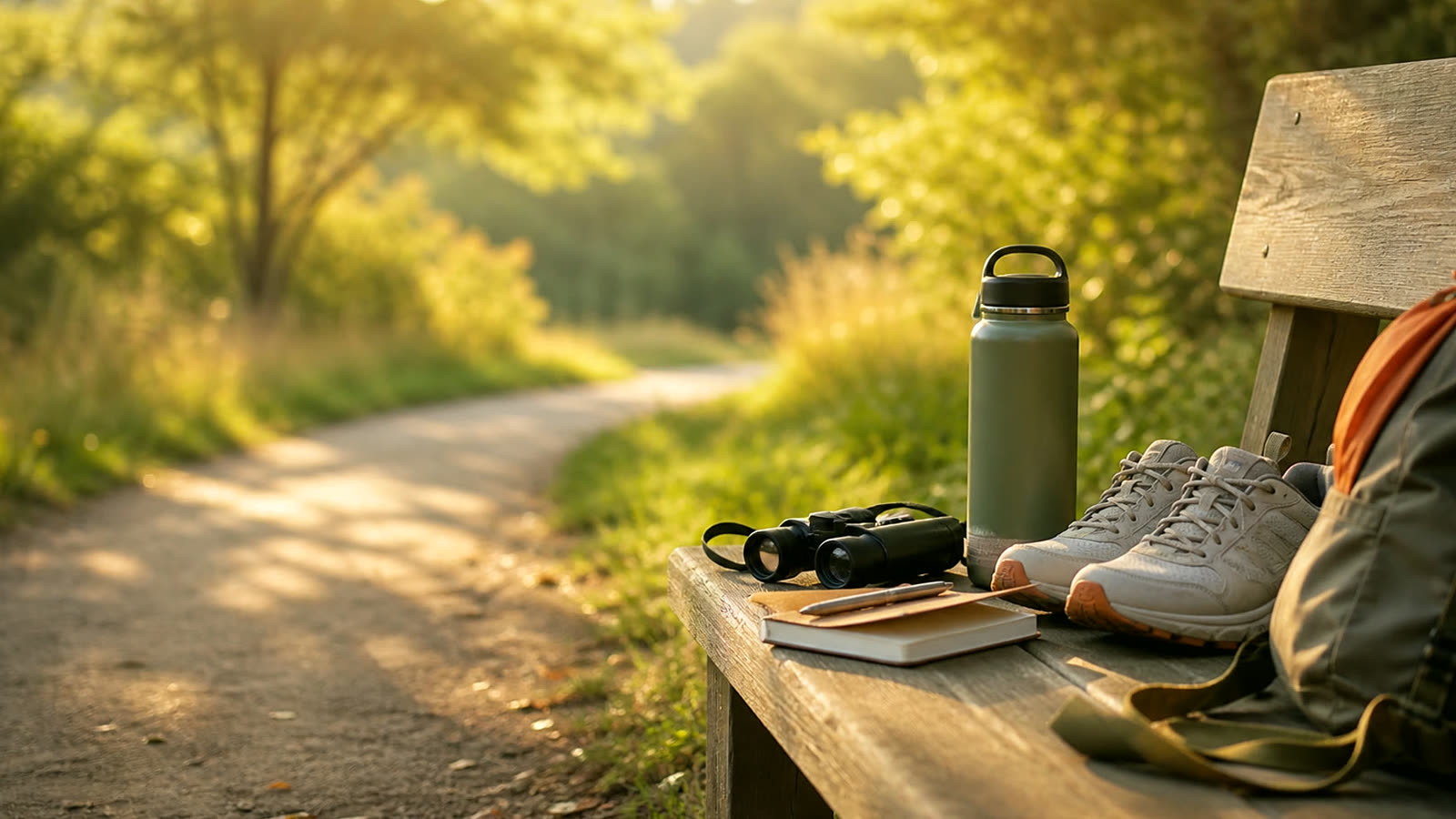
Field note: Beginner birdwatching kit with binoculars, a bird field guide, a nature journal, a feeder, and a walking path.
Who this guide is best for
Best fit
Adults who want a calm outdoor hobby that can start from a window, neighborhood park, balcony, or short weekend walk.
First-session test
Spend 20 minutes at a safe window or public place, notice three birds or sounds, and write one note before buying anything—including binoculars.
Do not overbuy
Skip expensive optics for now if you are not yet sure whether you enjoy slow observation or repeat nature walks.
What this guide covers: this page focuses on birdwatching starter gear, nature walks, and low-pressure outdoor observation, so it stays distinct from broader LikeHobby idea lists and related buying guides.
Your first 20 minutes
A notebook is enough for a first field note
Choose a safe window, an accessible park seat or a familiar public path. Bring a pen, any notebook and what you normally need for that setting. Binoculars can help later; they are not a requirement for this observation exercise.
Minutes 0–5 / Settle
Choose one place to look
Stay still for a few minutes. Scan an open edge, tree, hedge or patch of water without approaching nests or following a bird off the path.
Write: the date, approximate time, setting and weather.
Minutes 5–15 / Notice
Describe before naming
Pick one bird if you can. Note its size relative to a familiar bird, body shape, movement and where it is feeding or resting.
Write: two visible features and one action. “Small brown bird; species unknown” is an honest record.
Minutes 15–20 / Keep a note
Leave one question for next time
Sketch a simple outline or write three descriptive words. Choose one detail you want to check later in a local reference.
Write: “Next time I want to notice…” If no bird appears, record the place and conditions; there is no sighting quota.
Copy this into any notebook
Date and time:
Place and weather:
Bird seen or heard (unknown is fine):
Shape / size / movement:
One thing to look for next time:
Illustrative entry, not a reported sighting: “Park edge, 8:10 a.m., overcast. Small brown bird hopped below a hedge. Short tail; species unknown. Next time: look at the bill.”
For this first session, watch quietly rather than playing bird calls. Keep away from active nests, respect access rules and minimize disturbance, following the ABA’s birding ethics guidance. Audubon’s beginner guide explains why you can start without binoculars. For identification help afterwards, Cornell Lab’s free Merlin Bird ID offers suggestions to check against what you observed.
No answer is preselected. Setting and trial proof are always required; a blocker is required only when you already want another session. Partial answers and mismatches never activate a paid link.
0 of 2 required answers complete. No paid links are active.
Next session
Boundary to keep
Try before you shop: the one-session filter
Start without new gear. Audubon says birding can begin without binoculars, while Cornell offers the free Merlin Bird ID app and recommends trying binoculars in person because ergonomics vary.
1
Use eyes and ears first
Watch from a safe window or public place for 20 minutes. Notice shape, movement, habitat, and sound before adding magnification.
2
Use one free reference
Try Merlin Bird ID or All About Birds. A paper field guide becomes relevant only when screen-free identification is the proven blocker.
3
Delay the upgrade
Wait until you want a second session. If the hobby does not pull you back after a few days, choose a smaller path instead of buying more.
Review note: no product is the default. A paid comparison appears only after a completed session, repeat intent, and a compatible blocker. A specialized journal never qualifies because any notebook already works.
Five options the matcher can evaluate
The editorial order below remains fixed. These are decision references, not five things to buy: only a complete, compatible matcher result can generate one paid comparison.
Standard beginner binoculars
Relevant whenA repeat park or trail session proved distant detail is the blocker.
Why it can helpA comfortable 8x-style view is generally easier for a beginner to steady than higher magnification.
BoundaryTry fit, focus, eye relief, field of view, balance, and return terms before ordering; premium optics can wait.
Compact lightweight binoculars
Relevant whenA borrowed standard pair was too heavy to carry on a repeat park or trail session.
Why it can helpA lighter format can solve a real repeatability problem.
BoundaryCompact size can reduce low-light comfort and make controls tighter, so it is not the automatic beginner default.
Local bird field guide
Relevant whenYou tested free identification help and a screen-free reference is still the blocker.
Why it can helpOne guide matched to the region can turn repeat observations into a simple learning loop.
BoundaryTry free Merlin first and avoid buying multiple guides at once.
Nature journal
Relevant whenYou want to remember dates, places, details, and sounds.
Why it can helpShort notes make progress visible without adding technical gear.
BoundaryAny notebook or notes app already works, so this guide never opens a paid journal comparison.
Window bird feeder
Relevant whenOutdoor access blocks repeat sessions and every permission, collision, hygiene, and cleanup check is explicitly confirmed.
Why it can helpA responsibly placed feeder can support repeated close-to-home observation.
BoundaryUnknown permission, unsafe glass placement, or unreliable cleaning makes this an immediate no-buy result.
How to avoid wasting money
Start with comfortable binoculars and a simple guide. Expensive optics can wait until you know how often you go out.
Use a simple rule: buy the smallest kit that lets you complete one real session. If you still want to do it again after a week, then consider an upgrade.
Four useful next comparisons
Compare another outdoor path, a low-energy routine, small-space gardening, or an easy learning path for older adults before choosing dedicated birdwatching gear.
Birdwatching gear should match where you will watch first: a window, a local park, or short weekend walks. Use this table to avoid buying a full outdoor setup too early.
Option
Best for
Why it works
Watch out for
Window bird feeder
Apartment beginners and low-energy starts
Visible birds without travel
Check cleaning access and seed mess first
Beginner binoculars
Parks, walks, and mixed outdoor use
Makes the first real outing more rewarding
Choose comfort and easy focus over magnification hype
Field guide or app companion
People who enjoy identifying what they see
Turns a walk into a repeatable learning loop
Use one simple reference before buying multiple books
Nature journal
Slow observers and screen-free hobby seekers
Creates memory and progress without extra gear
Any notebook works for the first week
Frequently asked questions
Do beginners need expensive binoculars?
No. Start with lightweight, easy-focus binoculars and upgrade only after you know you enjoy regular bird walks.
Can I start birdwatching without hiking?
Yes. A window feeder, local park, or short neighborhood loop is enough for the first sessions.
Are LikeHobby product links affiliate links?
Some product links are Amazon affiliate links. LikeHobby may earn from qualifying purchases at no extra cost to you, and the guide still recommends starting small.
Sources and scope of this beginner guide
The observation exercise is an editorial plan informed by Audubon’s beginner guidance, Cornell Lab’s identification resources and the ABA’s birding ethics. These sources were checked on September 12, 2026. The sample field note is illustrative; this page does not claim field-tested optics or a guaranteed wildlife sighting.
01
Start with one session
Choose the smallest version that gives you a real attempt: one short practice, one walk, one project, one recipe, one page, or one repeatable routine.
02
Check repeatability
A hobby is a better fit when you can restart it on a normal week without special motivation, extra space, or a complicated setup ritual.
03
Buy only for friction
Gear should solve a specific blocker such as comfort, safety, storage, cleanup, instruction, or consistency. If it only makes the idea look more exciting, wait.
Editorial note: some LikeHobby pages include Amazon affiliate links, but the recommendation standard is still no-buy first. The useful part should be the decision framework even if you never click a product link.
Still unsure? Take the hobby quiz.
The free quiz returns three explainable matches and a no-buy 20-minute first session, based on your time, budget, energy, setting, and motivation.