At homeRelaxing hobbiesAfter-work routinesUpdated 2026-09-07
40 Relaxing Hobbies at Home for Adults After Work
Good relaxing hobbies at home are quiet, easy to stop, and simple to repeat when your energy is low. Compare 40 hands-on, screen-free, movement, learning, and small-space ideas, then test one for 20 minutes without buying supplies.
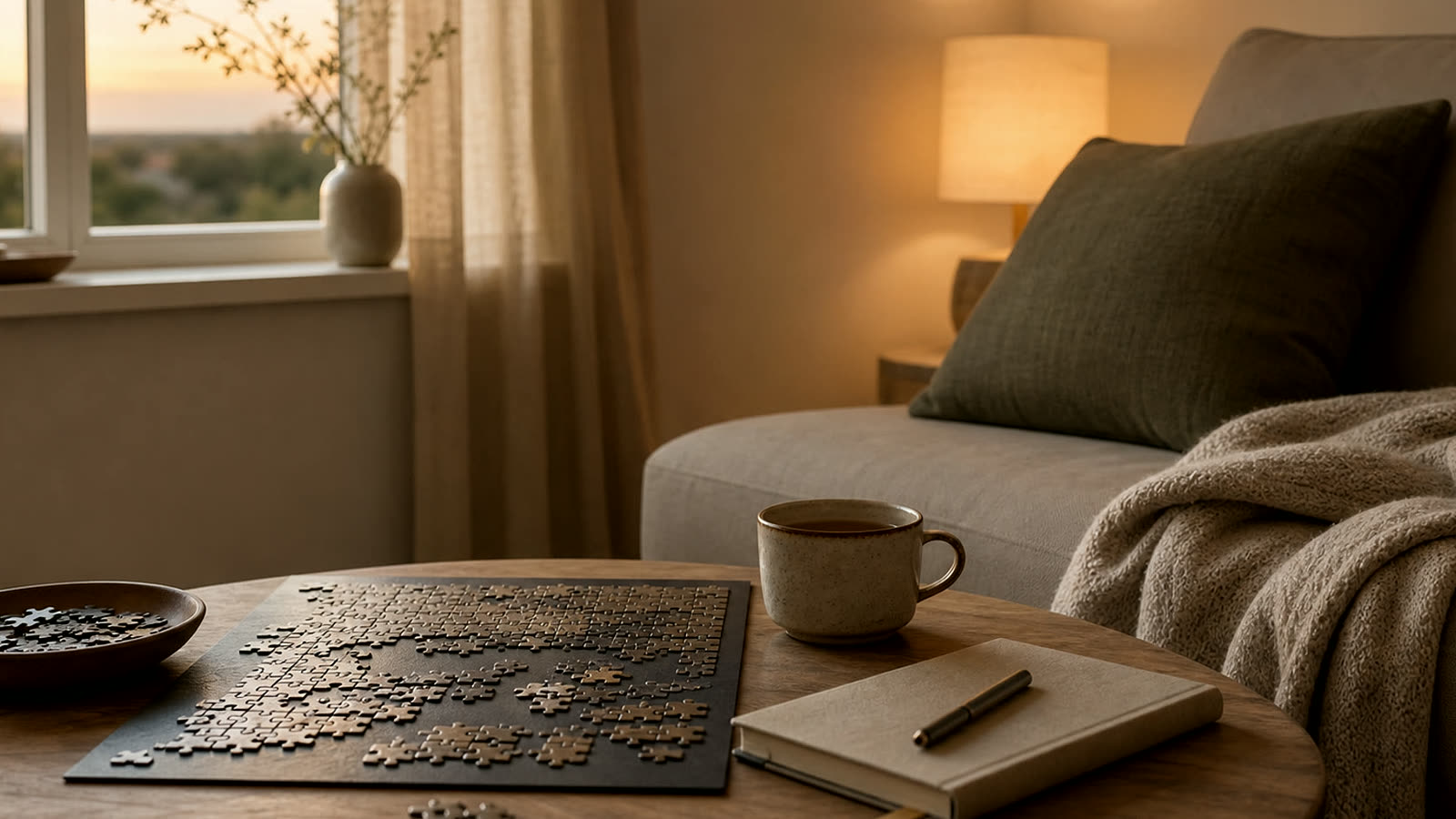
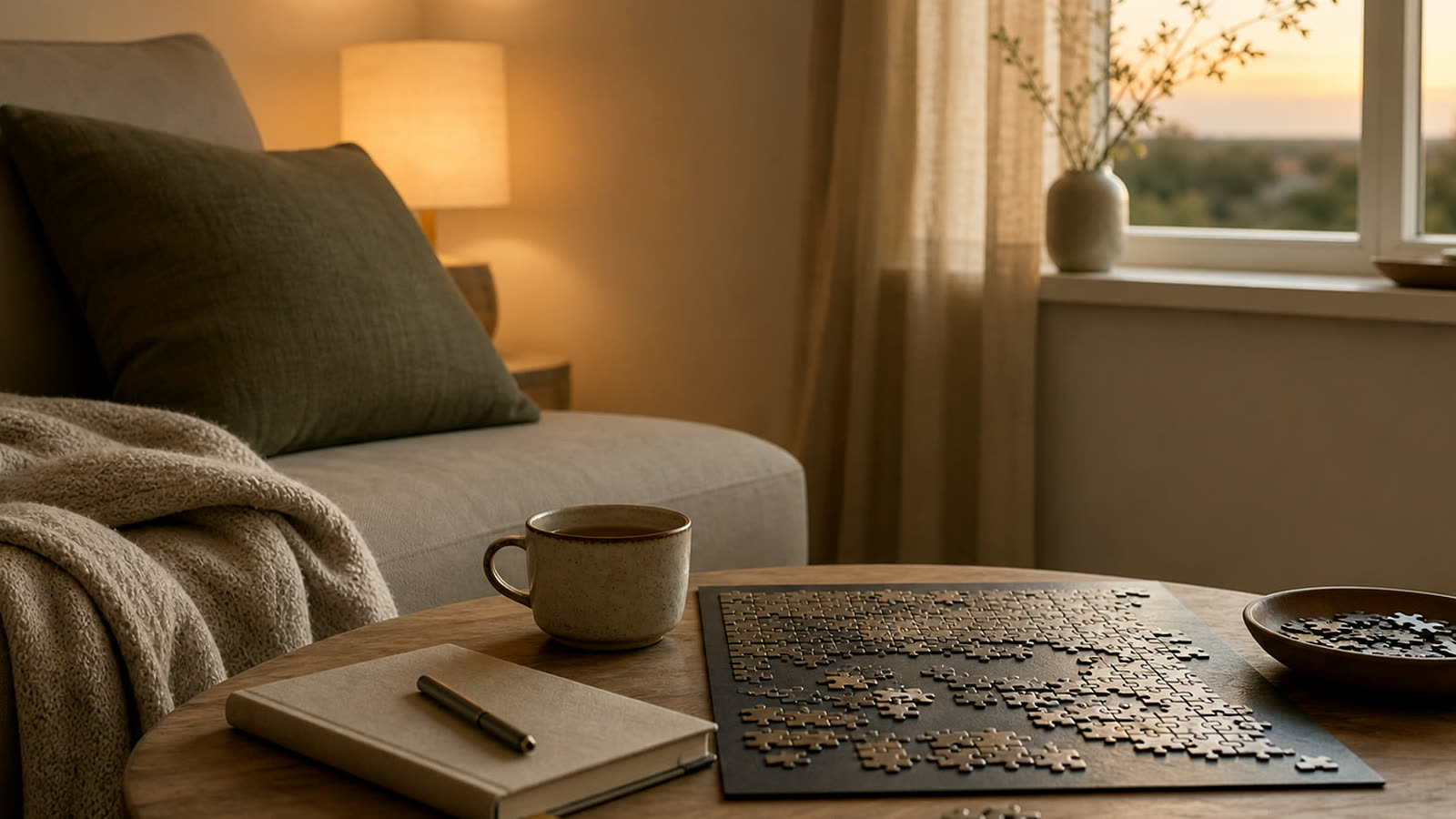
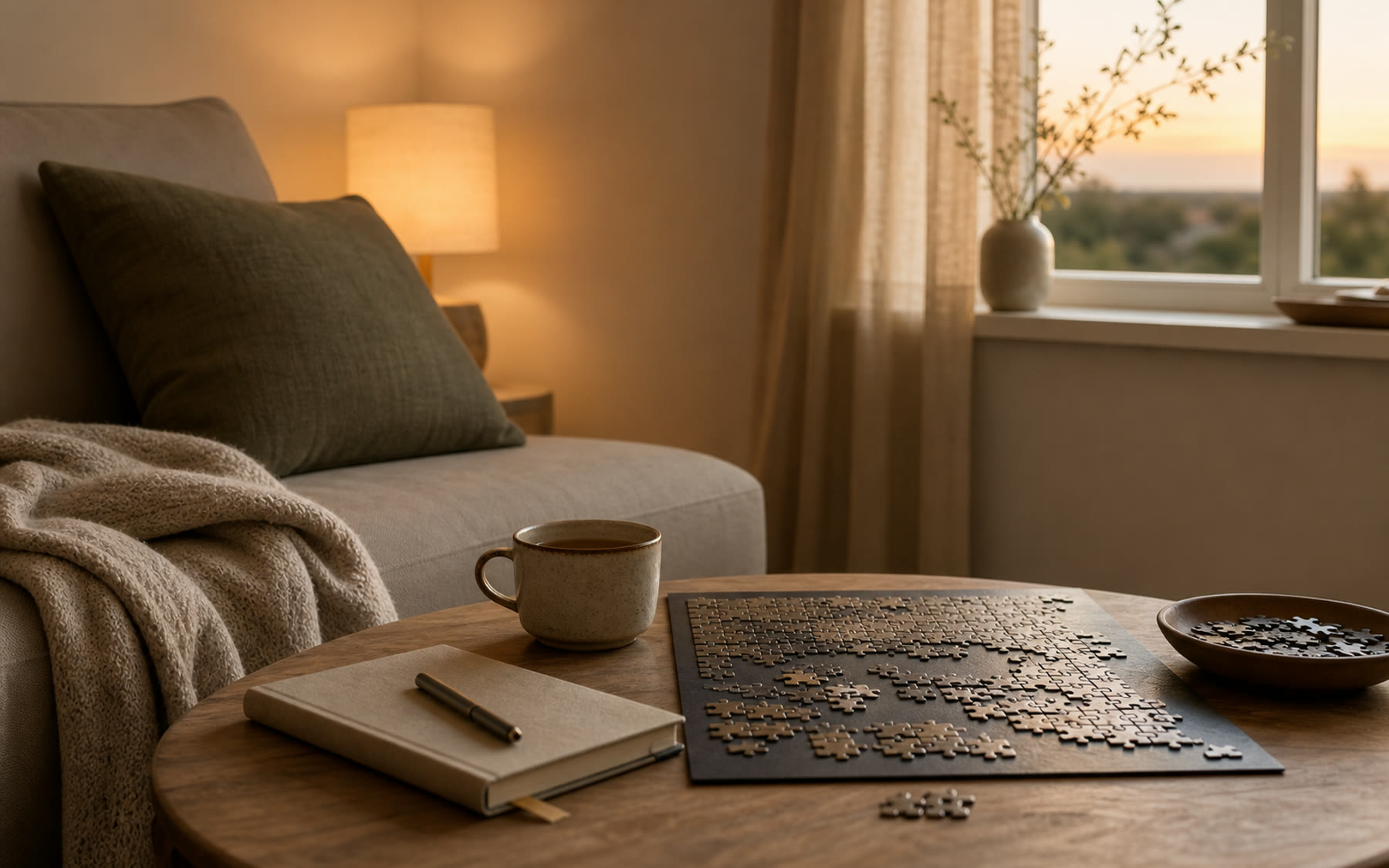
An illustrative home-hobby scene: tea, a journal, and a puzzle ready for a quiet evening.
01 Match tonight02 Try it free twice03 Solve one real blocker
Your calm, narrowed
Choose a relaxing hobby by how you feel tonight
A task-first path starts with the job to do. Here the job is recovery: choose your energy, the kind of calm you need, and whether the phone stays away.
Best fit tonight
Guided journaling
A fixed five-line close gives a very tired mind one clear finish with no screen or new supplies.
No-buy sessionWrite five dated lines: drained, restored, noticed, can wait, tomorrow.
Finish lineFive dated lines and one item that can wait.
Two workable alternatives
Showing one best fit and two alternatives for a very-low-energy, phone-away evening.
Guided journaling
Breathing practice
Origami
Jigsaw puzzles
Sketching objects
Beginner yoga
Embroidery
Slow reading
Window herb care
No-buy proof
Repeat the same calming hobby twice before shopping
Selection is not a start. Complete the same small plan on two ordinary evenings, then name one repeated blocker—or honestly choose none.
Step 1ChooseOne ranked no-buy plan
Step 2Try twiceSame idea, two finishes
Step 3Name frictionOne blocker or none
Step 4Next stepZero or one product
Selected no-buy plan
Choose one ranked plan above
Your exact 20-minute session will appear here.
DoUse the finder to choose a plan.
FinishOne bounded result.
Choose one ranked plan to begin. No product links are active.
Good no-buy result
Keep using what already works
No repeated material blocker means no product is needed.
Disclosure before the paid link: As an Amazon Associate I earn from qualifying purchases. This optional Amazon.com (US) search costs you nothing extra and never changes the no-buy-first recommendation.
One blocker, one minimum setup
Small preprinted beginner embroidery kit
For two completed scrap-fabric sessions where compatible materials, clear instruction, storage, or reliable access was the repeated blocker.
Relaxing hobbies at home are easier to repeat when they are quiet and easy to stop: slow reading, journaling, puzzles, sketching, plant care, and gentle movement. Match the activity to tonight's energy, set a 20-minute timer, and stop while it still feels restorative.
Every idea includes a no-buy first-session note. Product links stay absent until the same plan is completed twice and one compatible blocker is named; a no-buy answer is a successful result.
Quiet hands-on hobbies
Use your hands without turning the evening into a project management session.
01
Knitting
A tiny sample lets you test the rhythm before tackling a scarf.
First session: Borrow needles and yarn, then follow the Craft Yarn Council diagrams for casting on eight stitches and knitting two rows. Count your stitches and save the sample.
02
Crochet
One short chain introduces the hook without committing to a project.
First session: Borrow a hook and yarn. Follow the Craft Yarn Council's starting diagrams to make ten chain stitches, then lay the chain flat and count its V shapes.
03
Origami
A sheet of scrap paper can become a working fan.
First session: Fold a scrap-paper rectangle back and forth in equal-width strips. Pinch one short end to hold the folds together; spread the other end into a fan.
04
Air-dry clay
Test a tiny decorative shape before making anything that needs strength.
First session: With leftover air-dry clay, pinch a shallow ring dish on a washable tray. Smooth one edge and leave it to dry as labelled; keep it for non-food use.
05
Embroidery
A single stitched line lets you see whether you enjoy the pace.
First session: Use DMC's running-stitch lesson with a needle, thread, and scrap fabric you own. Sew one short line of ten stitches; secure the thread and store the needle.
06
Coloring pages
A tiny color study avoids the pressure of finishing a whole page.
First session: Draw six boxes on scrap paper. Use three pencils to fill them with alternating colors; choose the pairing you would repeat on a larger design.
07
Candle making
Start with a design; hot wax can wait for proper instruction.
First session: Choose one beginner candle-making class and read its supply list. Write down what is included and one question for the instructor; stop before handling wax or heat.
08
Simple mending
A loose button gives a small repair a clear finish line.
First session: On a spare fabric scrap, sew a button through its holes several times, secure the thread underneath, and store the needle. Check that the button stays in place.
Screen-free hobbies
Good choices when your eyes are tired and you want a softer evening.
01
Slow reading
Revisit a few pages instead of chasing a reading target.
First session: Read five pages of a book you own or borrowed. Mark one passage and write one sentence about what it made you notice.
02
Guided journaling
A short prompt makes the blank page less demanding.
First session: Write five lines: what happened, what felt easy, what felt difficult, one thing you noticed, and what you want to leave for tomorrow. Close the notebook.
03
Jigsaw puzzles
A small section gives you somewhere manageable to stop.
First session: From a puzzle you own or borrowed, sort twenty pieces by color. Connect one small group, then keep it together on cardboard.
04
Tea tasting
Compare flavor, not equipment.
First session: Brew a tea you already drink using its packet directions. Let it cool enough to sip; note aroma, flavor, and how each changes as the cup cools.
05
Calligraphy drills
Repeated letterforms reveal spacing before you need a special pen.
First session: With a regular pen, draw two guide lines. Write five lowercase o's and five a's between them, then circle the two with the most even spacing.
06
Sketching objects
One ordinary object supplies all the subject matter you need.
First session: Place a mug on the table. Draw its outline without shading, then add the handle and one shadow. Date the sketch and stop.
07
Birdwatching from a window
A fixed view makes noticing changes the whole activity.
First session: Watch one window for ten minutes. Tally each bird you see and note its size, color, and movement; a zero-bird count is still a finished observation.
08
Paper collage
Scraps let you arrange a picture without drawing it.
First session: Tear five shapes from packaging or old magazines. Arrange them into a landscape on scrap paper; photograph the arrangement or glue it down when the composition feels finished.
Gentle movement
These can reset your body without becoming a full workout.
01
Beginner yoga
Choose instruction that suits a complete beginner.
First session: Read NCCIH's beginner precautions. Find one qualified instructor's introductory class and write two questions about modifications before trying unfamiliar poses.
02
Stretching routine
Choose one comfortable movement instead of a full routine.
First session: Open the NHS flexibility guide. Follow one suitable seated movement as shown; stop if it hurts. Note which instruction helped you move comfortably.
03
Tai chi videos
Watch how a slow sequence moves before copying it.
First session: Read NCCIH's tai chi introduction, then preview a qualified instructor's beginner lesson. Note its pace and available support; finish by choosing a class to ask about.
04
Breathing practice
Use a gentle pace without chasing longer breaths.
First session: Sit comfortably and follow the NHS breathing exercise for five minutes, keeping breathing gentle and unforced. Stop if uncomfortable; the finish line is the timer, not a feeling.
05
Evening walk
One familiar route can make an ordinary evening feel different.
First session: Choose a short, well-lit route you know. Walk at your usual comfortable pace, notice three different sounds, and return at your planned turning point.
06
Foam rolling
Learn the technique before applying pressure.
First session: Watch a qualified physiotherapist demonstrate one beginner technique. Write down the setup and areas they avoid; ask about suitability before using a roller on pain or injury.
07
Balance drills
A supported setup matters more than a difficult pose.
First session: Use the NHS balance guide with a wall or stable chair nearby. Try its first suitable exercise slowly; stop if unsteady. Seek advice if unsure.
08
Mobility flow
A chair-based sequence keeps the setup small.
First session: Use a stable chair without wheels. From the NHS sitting exercises, select two comfortable movements; follow their instructions and finish before discomfort. Ask a health professional if unsure.
Cozy learning
Pick a low-pressure subject where curiosity matters more than speed.
01
Language listening
A tiny audio clip turns listening into a repeatable game.
First session: Replay thirty seconds of a beginner recording three times. Write down three words you recognize, check the transcript, then repeat one short phrase aloud.
02
Nature identification
An observation sketch is useful even before you identify the species.
First session: Study a plant visible from home. Sketch a leaf and note its edge, shape, and arrangement; compare with a local field guide. Do not pick or taste unknown plants.
03
Music theory basics
Start by hearing a pattern you can count.
First session: Tap four steady beats while playing a familiar song. Mark where the musical phrase repeats; write one question about rhythm to explore next.
04
Coffee brewing
Change one detail so you know what you are comparing.
First session: With your usual brewer, record the coffee amount, water amount, and brew time. Taste after cooling, then choose just one variable to compare another day.
05
Recipe notebook
Keep the version you would actually cook again.
First session: Copy one familiar recipe onto a page. Add the pan you used, the step that took longest, and one change to test next time.
06
Herbal tea notes
Notice flavors in familiar packaged tea, without health claims.
First session: Read the ingredients of a tea you already tolerate. Brew it as labelled, let it cool, then record two flavor words and whether you want another cup.
07
Astronomy basics
A diagram can start your sky journal on a cloudy night.
First session: Use NASA's Moon phase guide to draw four phases and label them. At night, sketch the Moon if visible; otherwise save your diagram for another evening.
08
Personal finance reading
Learn one everyday term without buying anything or moving money.
First session: Open the CFPB toolkit and compare its spending tracker with its bill calendar. Using invented amounts, write one example showing what each tool records.
Small-space rituals
These work in apartments, bedrooms, and shared homes.
01
Window herb care
Check your window before assuming a herb will thrive there.
First session: For a herb you already have, note when its window receives direct light. Compare its care label with that location and record one question before changing watering.
02
Indoor plant watering
An observation log helps you avoid watering by habit.
First session: Choose one plant and check its care label, soil, and drainage. Record whether it needs water today; follow its specific instructions rather than watering every pot.
03
Pour-over coffee
Make one familiar cup into a small brewing experiment.
First session: Use your existing dripper and packet directions. Record the pour time and flavor after cooling; repeat the same setup next time before changing anything.
04
Mini sketchbook
A pocket-sized page makes stopping part of the practice.
First session: Fold scrap paper into a booklet. Draw today's keys on one page and a shoe on another; leave the remaining pages blank for future evenings.
05
Puzzle tray
Make your puzzle easy to pause and put away.
First session: Place a connected puzzle section on a tray or cardboard. Find a flat storage spot; finish by putting it away intact for next time.
06
Desk declutter ritual
One small surface is enough to see a finished result.
First session: Clear a notebook-sized patch of desk. Return five items to their places, recycle obvious packaging, and leave only tomorrow's first tool in the cleared space.
07
Photo sorting
A small album gives scattered memories a useful shape.
First session: Choose ten existing photos from one day. Select three favorites, place them in an album, and add one caption; keep the originals.
08
Scented candle routine
Try the evening ritual without an open flame.
First session: Read one page under a lamp or a flameless candle you own. Record whether the lighting makes reading comfortable; review USFA candle safety before ever lighting a wick.
Frequently asked questions
What hobby is best for relaxing at night?
Good night hobbies are quiet, low-light, and easy to stop, such as reading, journaling, puzzles, knitting, or gentle stretching.
What hobbies reduce scrolling?
Screen-free hobbies like sketching, puzzles, reading, plant care, and journaling can replace passive scrolling because they give your hands a simple task.
Do I need supplies to start a relaxing hobby?
Usually no. Start with paper, a book, a walk, or a simple routine first. Buy supplies only after you repeat the habit.
Related guides
Use these next if you want a more specific starter path.
If this page is close but not quite the right fit, use these adjacent guides to compare time, energy, budget, and starter-gear intent before choosing what to try.
How LikeHobby made this 40 Relaxing Hobbies at Home guide
This guide is organized around practical beginner fit, not a shopping list. For 40 Relaxing Hobbies at Home for Adults After Work, LikeHobby looks at setup time, cost, space, cleanup, energy level, social pressure, safety, and whether a reader can finish one real first session before buying more.
01
Start with one session
Choose the smallest version that gives you a real attempt: one short practice, one walk, one project, one recipe, one page, or one repeatable routine.
02
Check repeatability
A hobby is a better fit when you can restart it on a normal week without special motivation, extra space, or a complicated setup ritual.
03
Buy only for friction
Gear should solve a specific blocker such as comfort, safety, storage, cleanup, instruction, or consistency. If it only makes the idea look more exciting, wait.
Editorial note: some LikeHobby pages include Amazon affiliate links, but the recommendation standard is still no-buy first. The useful part should be the decision framework even if you never click a product link.
Want a calmer hobby that fits your actual evenings?
The free quiz narrows these 40 ideas by energy, time, space, budget, and motivation. If you already want a hands-on path, compare compact indoor kits next.